Cargo Capacity: What Fits in the 2026 Mazda3 Sport Hatch?
September 17 2026,
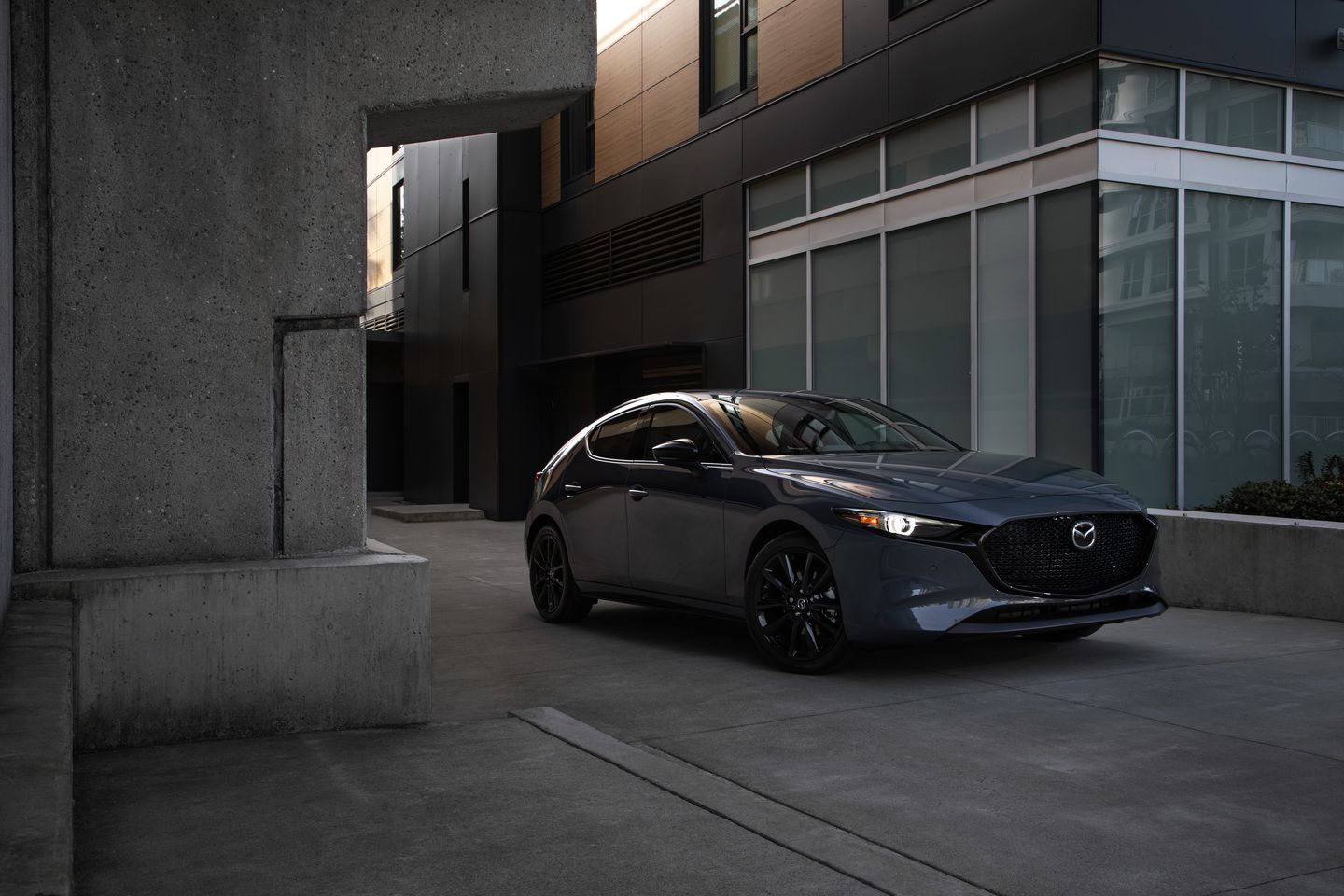
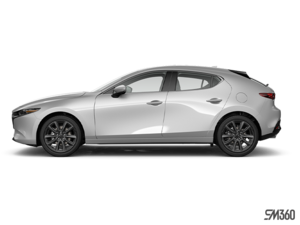
A hatchback lives or dies on how well it swallows the odd-shaped stuff of daily life: grocery hauls, hockey bags, a folded bike, a dresser from the secondhand shop. If you’re weighing the 2026 Mazda3 Sport for New Brunswick errands and weekend trips, the real question isn’t the spec sheet number. It’s whether your gear actually fits.
This guide walks through the Sport hatch’s cargo layout in plain terms: what the space looks like with the rear seats up, what opens up when you fold them, and where trim choice actually changes the experience.
How Much Cargo Space Does the 2026 Mazda3 Sport Hatch Have?
The Mazda3 Sport hatch holds 569 L behind the rear seats. Fold the rear seatbacks down and that grows to 1,334 L, measured up to the headrests. That’s a meaningful jump, and it’s the number that matters most for anyone who occasionally hauls something bigger than a weekly grocery run.
A quoted cargo figure tells you volume, not shape. The hatch’s rear opening and relatively flat floor matter just as much as the litre count, because a boxy item that clears the opening loads far easier than a taller item that technically fits the volume but not the geometry.
What Fits With the Rear Seats Up?
With the second row in place, the 569 L space comfortably handles the daily stuff: a full grocery run, a couple of duffel bags, a stroller, or a set of golf clubs. Work gear like a tool bag or a laptop case slides in without touching the rear seatbacks.
Luggage is where shape starts to matter. A couple of mid-size suitcases fit standing up; a third bag usually needs to lie flat. Sports gear like skis or a hockey stick bag will often need to angle diagonally across the load floor, since the seats-up space is sized for boxes and bags rather than long, straight items.
What Changes When You Fold the Rear Seats?
Folding the rear seatbacks down turns the Sport hatch from a daily runner into a genuine hauler. At 1,334 L, the space opens up for items that simply don’t work in the seats-up configuration: a flat-pack shelf, a bike with the front wheel removed, a folded patio table, or a stack of moving boxes.
This is also where the 60/40 split-folding rear seat, standard on the Mazda3 Sport GX, earns its keep. Splitting the seatback lets you carry one long item, like a ladder or a length of lumber, while keeping a rear seat available for a passenger. That flexibility matters for anyone who needs cargo and people capacity on the same trip, not one or the other.
Does the Trim You Choose Affect Cargo Practicality?
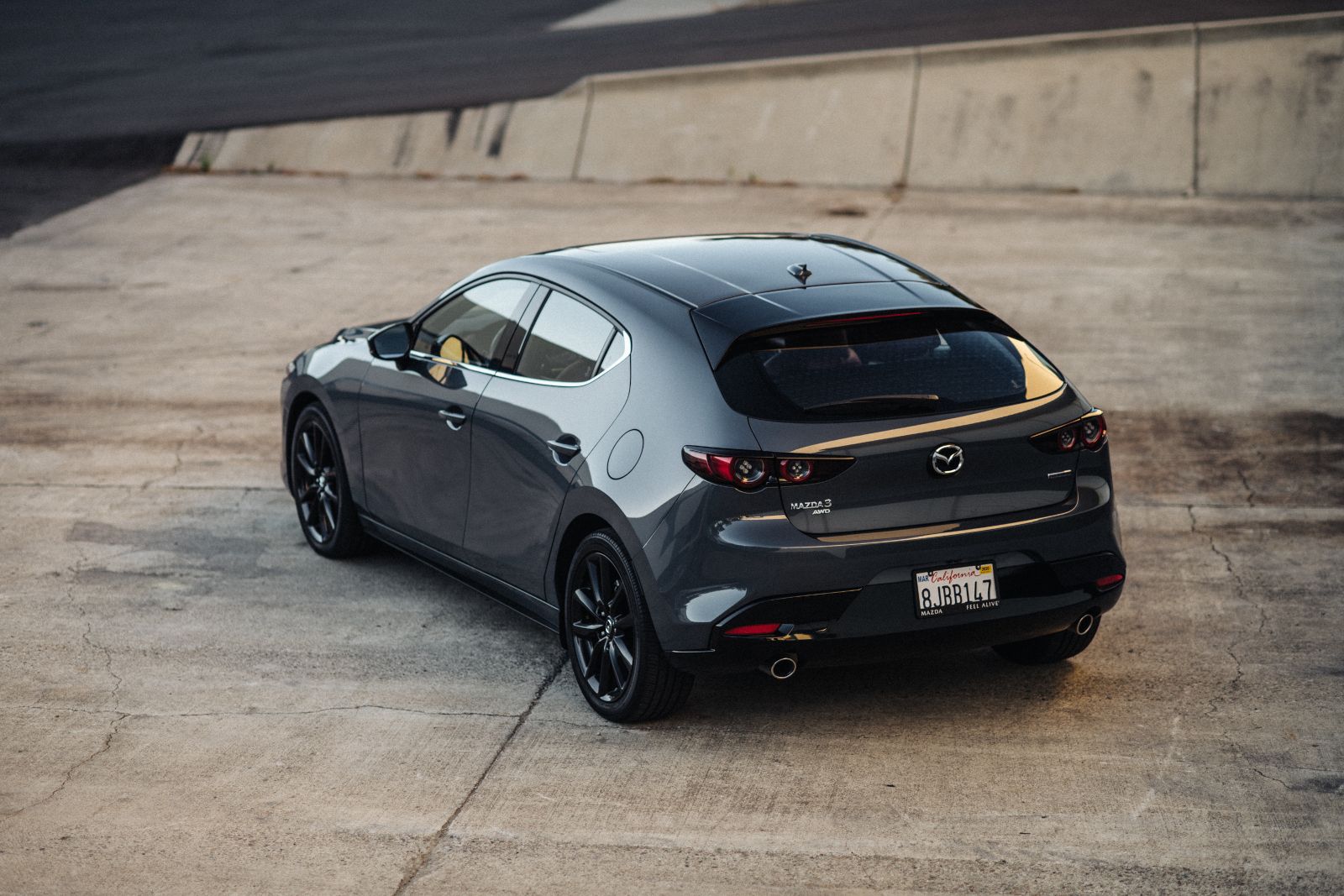
The cargo volume itself, 569 L and 1,334 L, is the same across GX, GS, and GT. What changes with trim is how easy the space is to live with day to day.
The GX comes with cloth upholstery and manually adjustable front seats, which keeps things simple if you’re mostly hauling gear rather than passengers. Stepping up to the GS adds available leatherette seating and, with the optional Luxury Package, a power moonroof and memory-linked mirrors that make loading and unloading in tight spots a little smoother.
The GT adds front and rear parking sensors and a 360° view monitor, both genuinely useful once the cargo area is loaded high enough to block the rearview mirror. If you’re routinely parking loaded up in narrow lots or tight driveways, that visibility upgrade is worth weighing against the base GX.
Mazda3 Sport Cargo at a Glance
- Behind rear seats: 569 L
- Rear seats folded (to headrests): 1,334 L
- Rear seat configuration: 60/40 split-folding (GX)
- Seating capacity: 5
Is the Mazda3 Sport Hatch Right for Your Household?
Solo drivers and couples in New Brunswick who split their week between commuting and weekend errands will find the 569 L seats-up space handles almost everything without a second thought. The 60/40 split fold means the occasional big item, like flat-pack furniture, never forces a choice between cargo and a passenger.
Small families juggling strollers, sports gear, and groceries on the same trip get the most out of the fold-flat flexibility. The trade-off is compact-car dimensions: this isn’t a vehicle for regularly hauling large furniture or multiple bikes at once. If your household routinely needs that kind of capacity, a larger SUV is the better fit.
For everyday carrying, work gear, and the occasional bulky load, the Sport hatch’s layout does the job without the extra size or fuel use of a bigger vehicle.
See the Mazda3 Sport’s Cargo Space in Person
The 2026 Mazda3 Sport hatch pairs a 569 L seats-up cargo area with 1,334 L once the rear seats fold, giving New Brunswick drivers a compact hatch that flexes between commuting and hauling. Trim-level extras like parking sensors and the 360° view monitor add convenience once the load floor is full.
Visit King Mazda in Saint John to see how your own gear fits in the Mazda3 Sport’s cargo area, and ask about which trim matches how you actually load it up.